
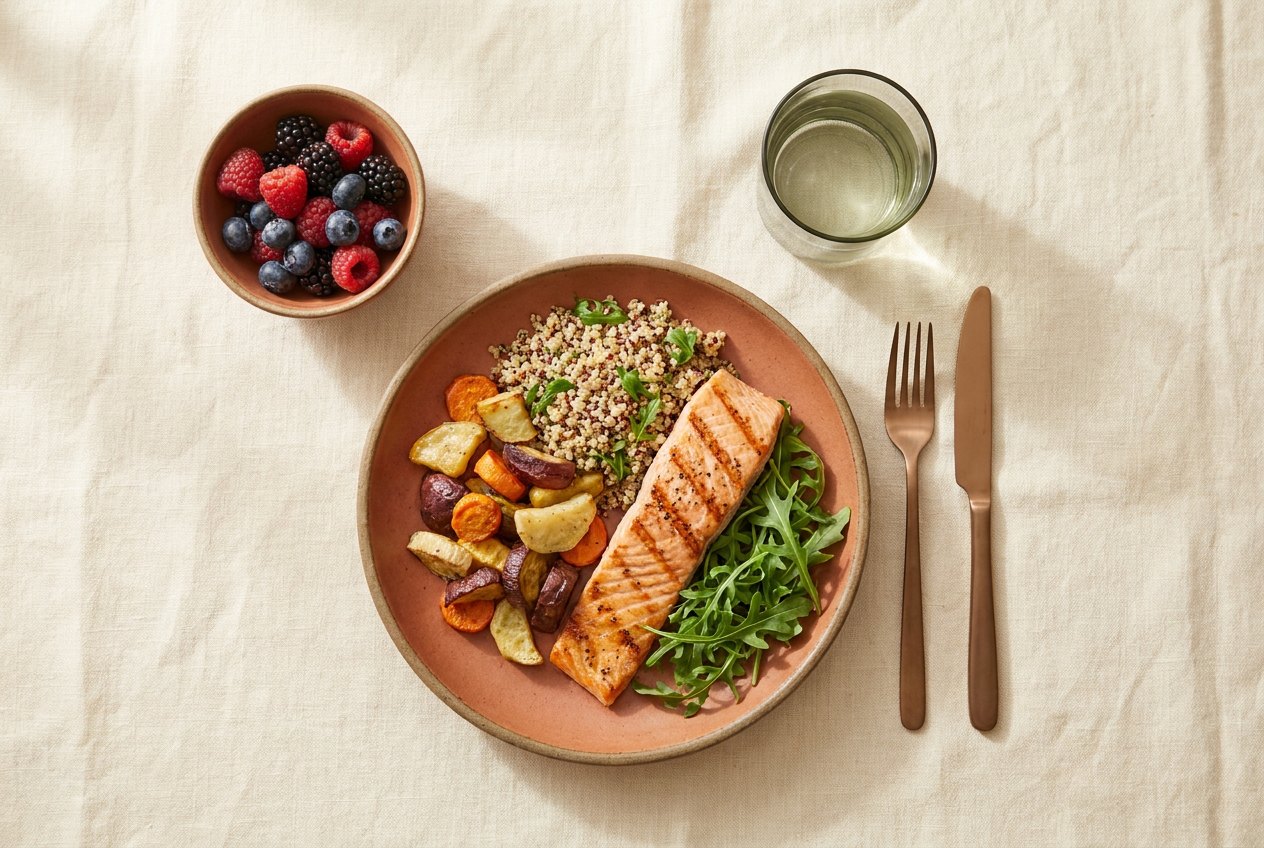
I do not hand out diets. Not because dieting does not work — on paper almost every diet works — but because hardly anyone sustains one beyond a few months. And an approach you do not sustain is not an approach.
Why diets fall apart
Every diet that works ultimately does the same thing: it gets you eating less than you burn. Low carb, intermittent fasting, counting points — different roads, same destination. The difference is not whether it works, but whether you can keep it up with your job, your family and your preferences.
That is why I never start with a meal plan. I start by asking what your days look like. Someone who leaves at half past five and gets home at seven needs a different solution than someone working from home with the fridge around the corner.
Protein is where we start
If I could change one thing about how most women over 40 eat, this would be it. Protein keeps you full, protects your muscle mass while losing weight, and costs your body more energy to digest than fat or carbohydrates.
Guideline: 1.6 to 2 grams per kilo of body weight. For someone of 70 kilos that is 110 to 140 grams a day. Almost nobody is anywhere near that at the start — most women I measure sit around 55 to 70 grams.
Spread it across the day, in portions of 25 to 40 grams. So not a cheese sandwich at lunch and a large steak in the evening, but something at every meal. Quark, eggs, chicken, fish, legumes, tofu, and a shake if that is the only way it fits.
Carbohydrates are not your enemy
Cutting carbs works well at first, because you lose water and that is easily two kilos on the scale. After that it gets hard: you need them to train intensively, and in women going through menopause I often see very low carb going hand in hand with worse sleep and a shorter fuse.
What I do steer on: the type and the timing. Fibre-rich carbohydrates as the base, and most of them around your training. That is something quite different from cutting them out.
What needs to be said honestly about alcohol
Alcohol delivers seven calories per gram, disrupts your deep sleep and blunts muscle recovery. Three glasses of wine in an evening is quickly three hundred calories plus a bad night plus more cravings the next day. I am not going to tell you never to drink again. I will say this is often the first thing we discuss when someone says everything is right but nothing is happening.
The mistakes I meet most
Skipping breakfast and standing ravenous at the coffee machine by eleven. Breakfast is not compulsory in itself — but if skipping it means you catch up later in the day, it works against you.
Confusing "healthy" with "low calorie". Nuts, avocado, olive oil, granola: all fine, all energy dense. A handful of nuts is 200 calories, a bowl is 600.
Weighing everything on weekdays and not looking at the weekend. Two days can offset an entire week, and it happens more often than people think.
Overhauling everything at once. I would rather change one thing a week that sticks than ten things you drop within a month.
How nutrition guidance works with me
We start with a few days of writing things down — not to judge, but because almost nobody knows exactly what goes in. Then I pick one or two things to work on. Usually that is protein, and after that the structure of your day. I do not work with forbidden lists or meal plans you have to follow, because those end up in a drawer within two weeks.
What you do get: concrete guidelines, shopping that fits your week, and someone looking over your shoulder when it does not go to plan. That last part is usually the difference between knowing what to do and actually doing it.