"I don't want to get bulky." I still hear that sentence every week. I understand where it comes from, but it costs women over 40 more than they realise.
Why you will not get bulky
Building muscle takes time and hormones. Women have roughly fifteen to twenty times less testosterone than men, and after 40 that drops further. A well-trained woman might build one or two kilos of muscle in a year — spread over her entire body. That is not bulky. That is lean.
What women sometimes mistake for getting bigger is the first month: your muscles hold a little more water and glycogen and feel fuller. That settles. What remains is shape.
What you lose by doing nothing
From your thirties you lose muscle, and it accelerates after menopause. You will not notice it on the scale, because fat often takes its place. You notice it elsewhere: the shopping gets heavier, getting out of a low chair takes effort, a day of DIY wrecks you for two days.
There is also a side you cannot feel. Strength training puts mechanical load on your bones, and that is one of the few stimuli that maintains bone density. For women after menopause, with a raised risk of osteoporosis, that is not a minor detail.
Progressive overload: the only principle that matters
Your muscles only get stronger if you give them a reason. That means asking slightly more, exercise after exercise, week after week. More weight, more repetitions, or the same set with better technique and less swinging.
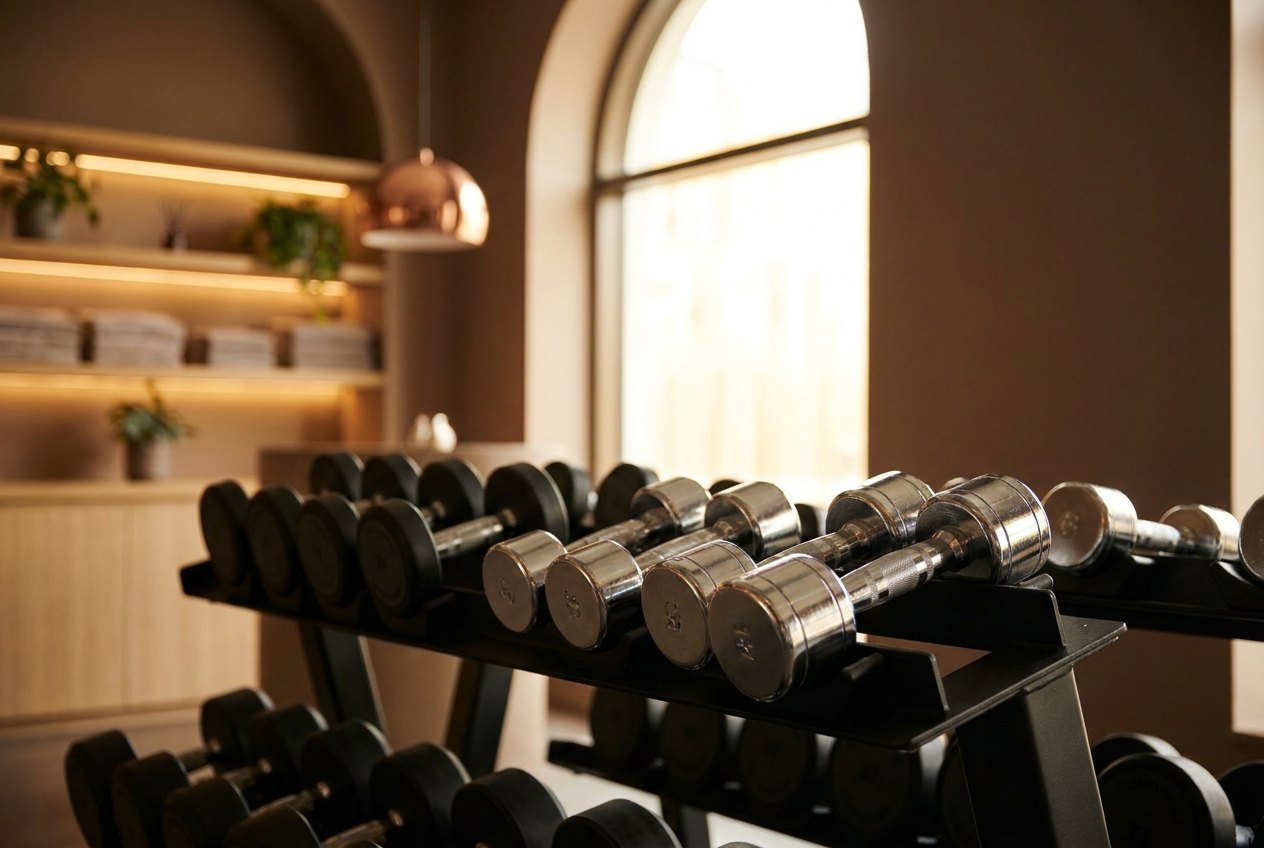
This is exactly where most people get stuck. I see women who have trained with the same four-kilo dumbbells for three years. They move well, they show up, and they are as strong as the day they started. If a set of twelve feels easy, it is time to go heavier.
Practically: on most sets, work to within two or three reps of genuine failure. Six to twelve repetitions is a fine range. Two to three times a week is enough for almost everyone.
What we train
I build programmes around compound exercises: squat, deadlift or hip thrust, rowing, pressing, assisted pull-ups. They train several muscle groups at once, give the strongest stimulus and translate straight into daily life. Machines I use as a supplement, or when someone lacks stability — not as the main course.
We do not skip legs. Your largest muscle groups sit below your hips, and that is where most of the gain is — for your metabolism, your bones and your posture.
After 40, recovery is half the work
You do not build muscle during training, but after it. And that recovery takes longer at 50 than at 25. Forty-eight hours between heavy sessions for the same muscle group is a good rule of thumb. If you sleep badly or you are in a demanding period, training less with more quality beats pushing through.
Protein is the other half: 1.6 to 2 grams per kilo, spread across the day in portions of 25 to 40 grams. Not all crammed into dinner.
What to expect
For the first four to six weeks you mostly get stronger without looking very different. That is your nervous system learning to recruit your muscles better — real progress, even if you cannot see it yet. Around the third or fourth month most women see a difference in their shoulders, back and legs. After a year of consistent training you carry yourself differently.
That is the honest timeline. Anyone promising you a new body in six weeks is selling you something.