
Menopause is often discussed as if it were a single moment. In practice it is a period of years in which your body gradually changes — and in which many women feel that everything that used to work suddenly doesn't.
What is actually happening
Perimenopause starts for many women somewhere between 40 and 45 and can last four to ten years before your periods stop for good. During that time your oestrogen fluctuates — it does not decline neatly, it swings up and down, and those swings cause much of the trouble.
Oestrogen does more than regulate your cycle. It plays a role in where you store fat, how sensitive you are to insulin, your bone building, your sleep, your mood and even the resilience of your tendons. When it drops, you notice it in all those places at once. Hence the feeling of waking up in a different body.
The complaints I hear most
- Fat shifting to your midsection while your weight barely changes
- Poor sleep — often waking around three or four in the morning
- Longer-lasting soreness after a session you used to handle easily
- Less energy and a shorter fuse
- More trouble with tendons and joints, especially shoulders and Achilles
What your training should change
The reflex for many women is: more cardio, less food. That is exactly the wrong direction. Long cardio sessions on a body already under pressure raise cortisol and do not help against the belly fat you are doing them for.
What does help:
- Strength training as the base. Two to three times a week, heavy enough to actually demand something. This protects your muscle mass, your bone density and your insulin sensitivity at the same time.
- Walking instead of endless sweating. Easy movement lowers stress rather than adding to it.
- Short, intense blocks — in moderation. One hard session a week is enough. Three is too much for most women in this phase.
- More protein than before. Your body uses protein less efficiently, so you need more of it for the same result.
- Taking recovery seriously. In a bad sleep week, training twice well beats four half-hearted sessions.
What training is not about
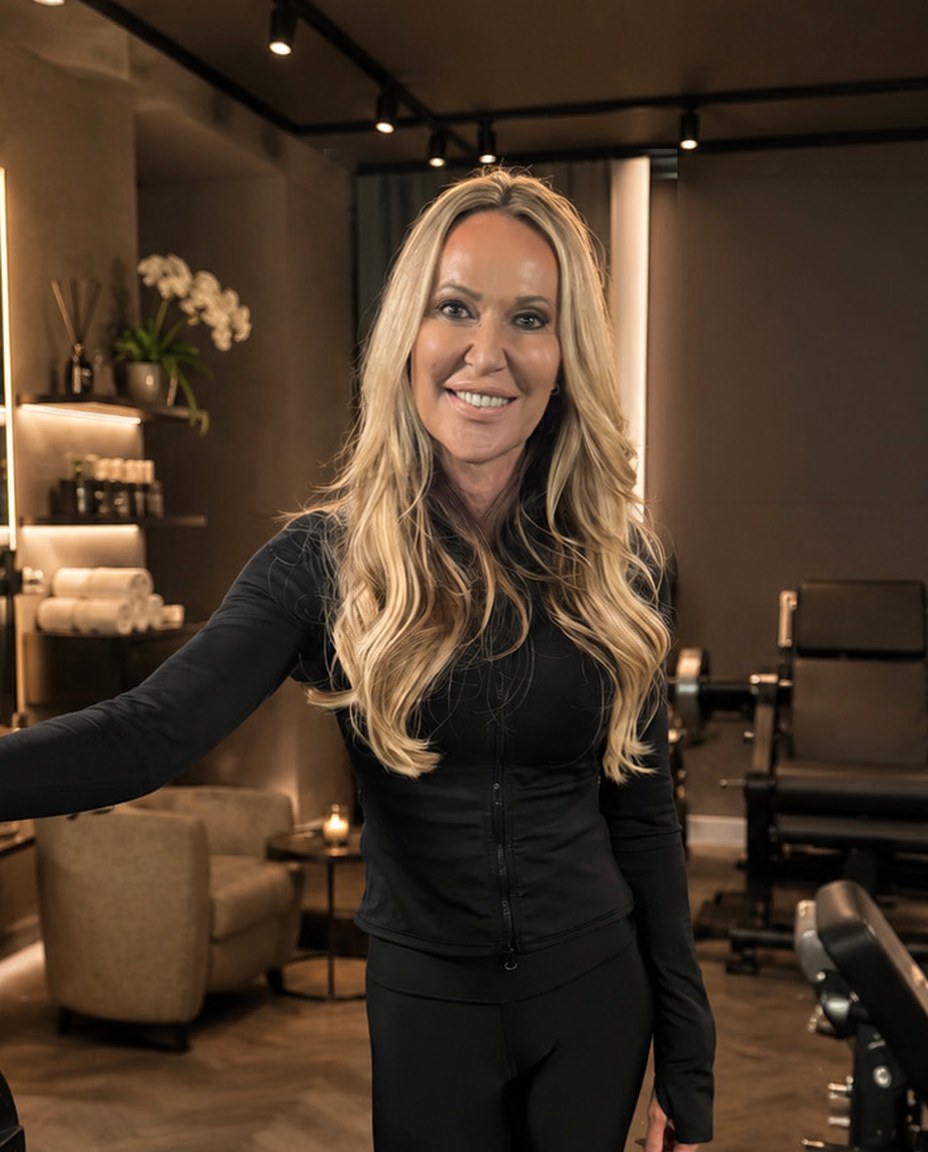
I am a personal trainer, not a doctor. Hormone therapy, medication and blood work are not my territory — that is a conversation with your GP or a menopause specialist, and it is a good conversation to have if your symptoms affect your life. What I do see: women who train well, eat enough protein and guard their recovery generally have an easier time in this period. Training is not a substitute for medical care, but it is the part you hold in your own hands.
What you gain long term
The years around menopause are when you lose bone density fastest. What you build in muscle and bone in this phase is exactly what determines how independent you are at seventy. I do not say that to frighten you, but because it is the best argument I know for starting now instead of in five years.
How I work with this
At the intake we go through your symptoms, your cycle if you still have one, your sleep and your energy across the day. From there I build a week that fits what your body can handle now — and that we adjust when you have a rough patch. No fixed programme you simply have to follow. In this phase, adapting matters more than pushing through.